
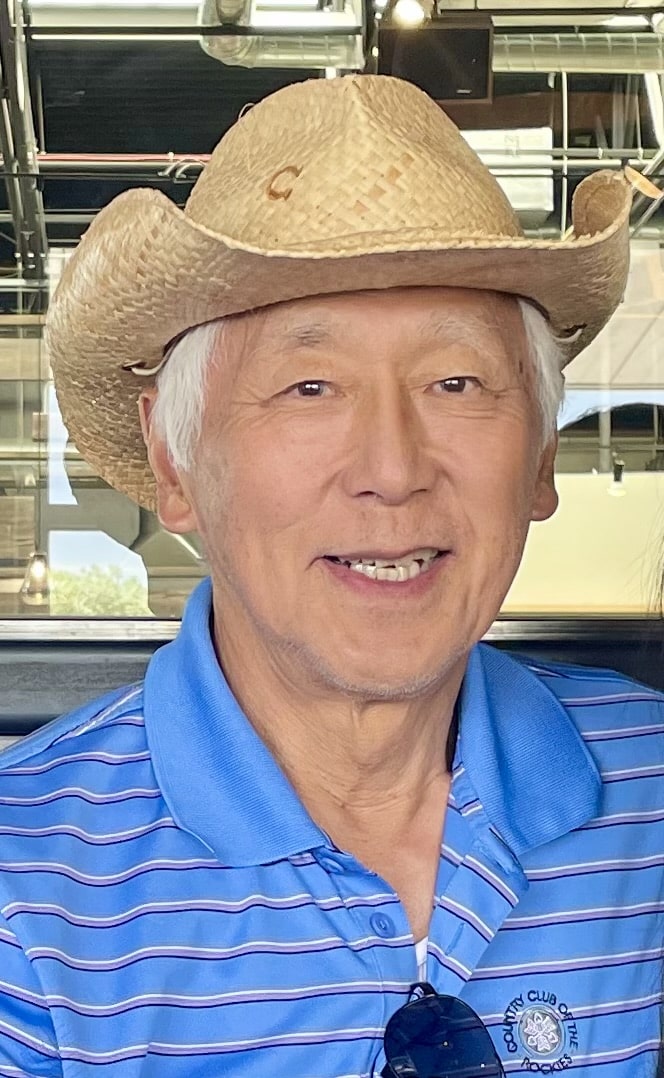
When Oscar Tang first came to the Vail Valley with his family in 1970, it was purely a ski town. The lifts were slow, the crowds were thin, and the people who lived and visited there were almost exclusively tied to the mountain. There was no performing arts venue, no cultural programming to speak of, and the idea that Vail might one day be recognized worldwide for arts and culture seemed far-fetched.
More than half a century later, the Vail Valley is a place where world-class music and dance fills the stage of the Gerald R. Ford Amphitheater on summer evenings, where thousands of children receive year-round educational support through Youth Power, and where a community once defined solely by skiing has become one defined by the richness of the life it offers. Oscar Tang, a Life Trustee of the Vail Valley Foundation, has been at the center of that transformation from the very beginning.
"If There's Something You Don't Like, You've Got to Fix It"
By the late 1970s, Oscar and his late wife, Frances "Frankie" Young Tang, had acquired a home in the valley and were spending parts of the summer there with their family. Oscar loved the mountains, but as Vail grew, he began to feel that the community needed more, and with skiing getting more crowded, it was time to move on.
Frankie, who had come to see Vail not just as a place to ski but as a community she belonged to, put it simply: "If there's something you don't like, you've got to fix it, because we’re not leaving."
That challenge set the course for what would become decades of transformative involvement with the Vail Valley Foundation. Oscar joined the VVF’s Board of Directors not long after, drawn to the organization's commitment to make the valley a stronger, more vibrant community for all who live in, work in, and visit the community.
Building the Gerald R. Ford Amphitheater
When the Vail Valley Foundation was founded in 1981, there was nowhere in Vail to host a performing arts event. If a visiting orchestra came to town, it played in makeshift conditions that were inadequate for the experience.
"There was a very urgent need for a performance space," Oscar recalls. "A gathering place for the community."
An early effort to build an amphitheater had stalled before the VVF became involved, and the unfinished structure sat idle. The VVF took the project over, raised the necessary funding from individual donors who believed in bringing arts and culture to the valley, and completed construction. Oscar was among those early supporters.
In 1987, the Gerald R. Ford Amphitheater opened its doors for the first time. It was modest: around 1,200 seats, a basic stage, and a partial roof that blocked the sun but not the rain. But it was a start, and the community embraced it immediately.
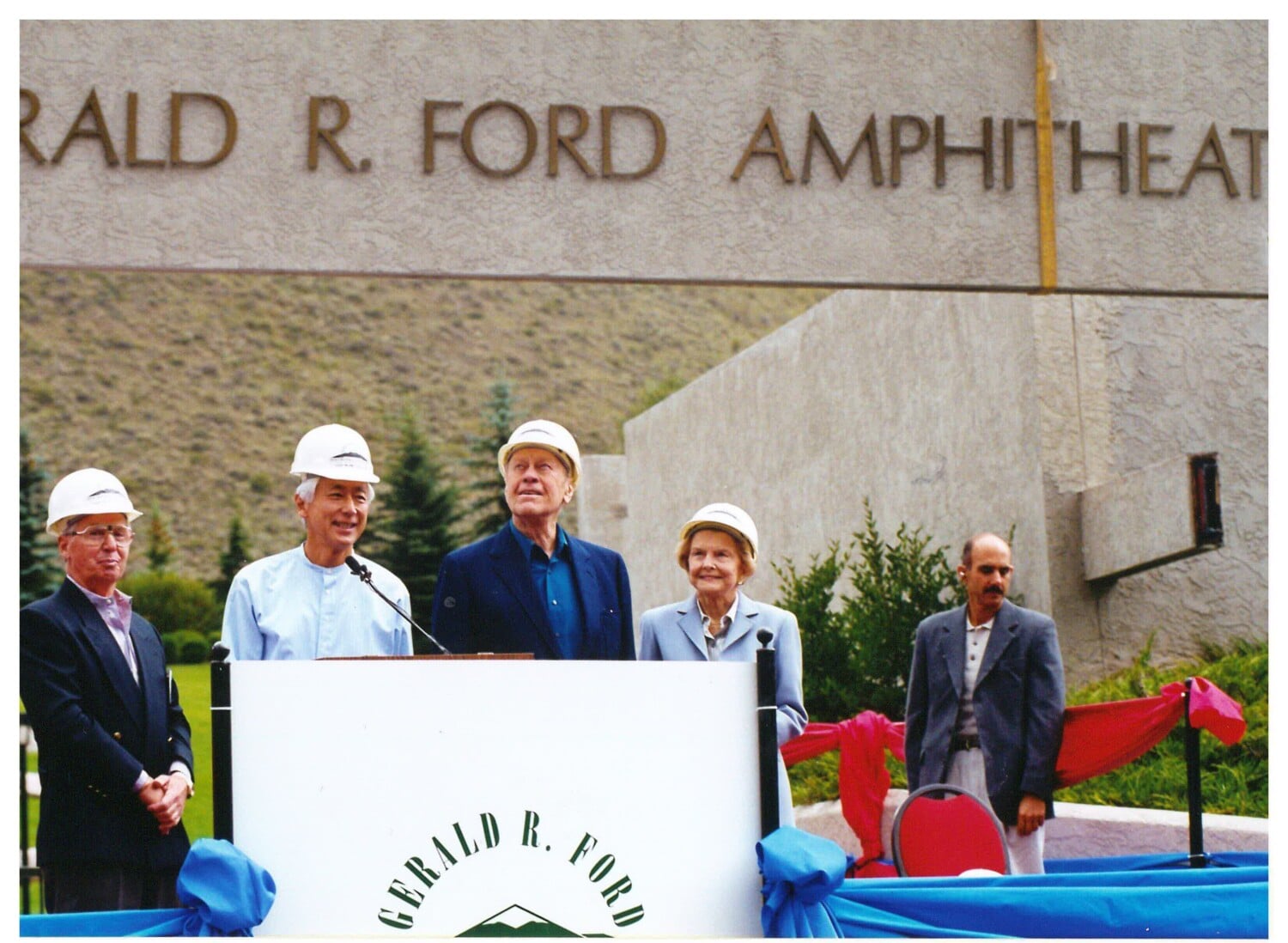
The venue evolved quickly from there. In 1992, the stage was rebuilt, and a green room was added. That same year, when Frankie passed away, Oscar asked President Ford if the stage at The Amp could be named in her memory. He agreed without hesitation, and the stage has carried her name ever since.
Oscar went on to serve as the primary fundraiser for the Amphitheater's first extensive renovation, completed in 2001, which made the pavilion weatherproof. It was one of several upgrades that would transform the venue over the decades.
The improvements attracted attention beyond the valley. The New York Philharmonic began performing as part of the Bravo! Vail Music Festival shortly after the 2001 renovation, helping establish it as one of the leading classical music festivals in the world.
"It makes living in Vail a much more complete life," Oscar says of the cultural landscape that has taken shape. "You can't live by physical activities alone. Those are for the body. You need something for the mind and the soul."
A Founding Patron of the Vail Dance Festival
In 1989, just two years after the Gerald R. Ford Amphitheater opened, the Bolshoi Ballet Academy's touring troupe had a scheduled performance fall through. Bob Knous, then president of the VVF, saw an opportunity and moved quickly to bring the dancers to Vail, rallying a small group of patrons to fund the effort. Oscar was one of them.
At the time, the valley had no dance tradition and little in the way of cultural programming. But Oscar saw clearly what was missing.
"We had a phenomenal amount of physical activities, but there was much more work to be done in terms of culture," he says. "I felt that dance would have a good chance to succeed."
He was right. What began as a one-time opportunity became the seed of the Vail Dance Festival, which has since grown into one of the most celebrated annual events in the dance world.
Championing Education
The VVF was built on three pillars from the start: arts, athletics, and education. In the early years, the organization’s education work was focused primarily on adults through think-tank-style forums. As the valley grew and the demographics of its expanding workforce changed, Oscar saw that the real need was in the education of the children in the valley.
Many of the new working families did not speak English, and the public school system was facing new and urgent challenges. The children who needed the most support were often the ones receiving the least.
Oscar helped lead the push to redirect the VVF's education efforts toward the valley’s families and their kids. He became the first chair of the VVF's education committee, and the committee's approach was straightforward: go to Eagle County Schools and ask what they need most.
The answer was full-day kindergarten. At the time, the State of Colorado funded only a half day, and families who couldn't afford to pay for the rest were out of luck. The VVF partnered with the school district to share the cost so that every child in Eagle County could attend full-day kindergarten. Over the years, the VVF's education efforts kept growing, eventually merging with those of the Youth Foundation. Today, Youth Power serves more than 4,000 children and families each year through programs spanning early childhood to college and career readiness.
Oscar's commitment to education is deeply personal. Born in Shanghai, his family was displaced by revolution and civil war, and he arrived in the United States at the age of 11. The education this country made available to him, he says, is the reason he was able to succeed in his adopted country.
"Education is equivalent to opportunity," Oscar says. "If there's anything that this country stands for, it's equal opportunity. We can never fully deliver on that promise, but we have to try."
That conviction has driven a lifetime of philanthropy extending well beyond the Vail Valley Foundation, and in 2004, Oscar was named Vail Valley Citizen of the Year — a recognition of his sustained, hands-on work helping build this community from the ground up.
An Evolving Legacy
Today, Oscar and his wife, Dr. Agnes Hsu-Tang, continue to generously underwrite marquee Vail Dance Festival performances including International Evenings of Dance and NOW: Premieres, and they are also Season Presenters for the Festival. After nearly four decades, Oscar remains invested because the Festival has never stopped evolving: its programming has expanded well beyond classical ballet to embrace a wide range of dance forms and a spirit of constant experimentation.
"During the normal dance season, the different companies have their set routines," Oscar says. "In Vail, it's always innovating, always experimenting. That's what makes it special."
The Gerald R. Ford Amphitheater, too, has continued to evolve. Several major renovations have turned that modest open-air space into the heart of the Vail community, hosting everything from the Vail Dance Festival and Bravo! Vail Music Festival to world-class headline concerts, free Hot Summer Nights shows, high school graduations, and more.
The VVF itself has expanded alongside it, adding community supports as a fourth pillar to meet the valley's changing needs. Through its $74 million Empowering Possibility Capital Campaign, the VVF is investing in the next generation of that work, including a $19 million renovation of The Amp that represents the venue's most ambitious transformation yet.
For Oscar, the growth of the VVF’s projects mirrors the growth of the valley itself: a place that started as a ski town and became a true, well-rounded community through the sustained effort of people who believed it could be more.
"The current amphitheater expansion speaks to the success of the original vision," Oscar says. "It speaks to the vibrancy of this community, that we've reached the point where we need to invest again for the present and the future."
When asked what he would tell someone considering getting involved with the VVF, Oscar returns to the idea that has guided him from the start.
"This is a foundation focused on building community," he says. "You can contribute to it, but you also get so much in return. You meet people who care about this place and want to make it better. We not only have to live our individual lives, but we have to build a stronger community in which we live. That's really what the Vail Valley Foundation is about."
To learn how you can support the Vail Valley Foundation and help build a stronger community, visit vvf.org/support.