
As the snow begins to dust the peaks and winter approaches, there's an electric anticipation building in the Vail Valley for the 2025 Stifel Birds of Prey happening December 4-7. This isn't just another ski race: it's the latest chapter in the Vail Valley Foundation's world-class ski racing legacy that began in the 1960s when professional ski racing first came to Vail, and was transformed in the 1980s when a group of visionaries dared to dream of bringing World Championships to Colorado.
This is the story of how the Vail Valley Foundation (VVF) went from an ambitious local nonprofit into a global powerhouse in Alpine ski racing, hosting three World Championships and creating one of the most feared and respected courses in the sport.
The Foundation of a Dream
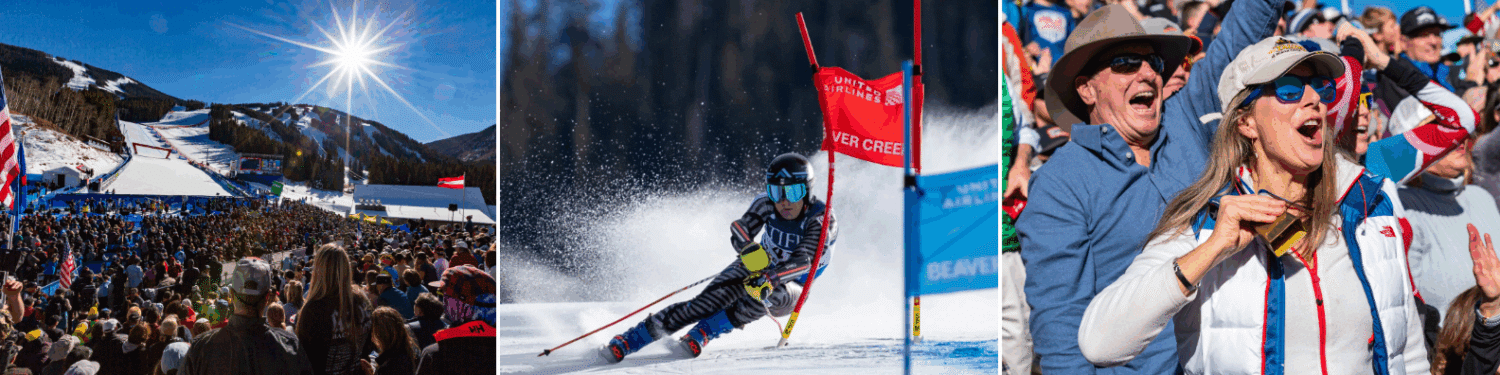
Our community's relationship with world-class ski racing predates the Vail Valley Foundation's involvement. The valley hosted ski races featuring legends like Jean-Claude Killy in the mid-1960s, before the official World Cup circuit began. In 1967, during the World Cup's inaugural season, both men's and women's races came to Vail, marking the beginning of a long ski racing tradition.
The Vail Valley Foundation joined the story in the 1980s, when the organization was still in its infancy. The VVF led the bid process to win the right to host the 1989 FIS Alpine World Ski Championships, the first in Colorado since Aspen hosted it in 1950. It was an audacious goal: bringing the sport's most prestigious event to a relatively young resort area.
But audacity paid off. The event took place in Vail from February 2–12, 1989, marking a pivotal moment not just for the VVF, but for the entire Vail Valley. The 1989 FIS Alpine World Ski Championships were not only fun; they also put Vail and Beaver Creek on the international map, with international skier visits jumping from 2% to 13% in just one year.
The success was undeniable. The 1989 World Championships were a huge success, both on and off the mountain, paving the way for a successful repeat bid for the 1999 event. The VVF had proven they could deliver world-class events, and the skiing world took notice.
Birds of Prey is Born
Following the triumph of 1989, the VVF set their sights even higher, successfully bidding to host the 1999 FIS Alpine World Ski Championships. In preparation, they commissioned Olympic Downhill gold medalist Bernhard Russi of Switzerland to design something special: the Birds of Prey racecourse.
Built during the summer of 1997, Birds of Prey is a monster of a course. With a vertical drop of 2,470 feet, an average gradient of 31 percent, and a maximum gradient of 63 percent, it was designed to test the world's best athletes to their absolute limits.
The course opened with a ceremony befitting its ambition: a traditional Native American blessing by tribal elder Red Ute, followed by a ribbon cutting. On December 4, 1997, Italy's Kristian Ghedina became the first World Cup race winner on the Birds of Prey downhill course with a time of 1:41.16. It was immediately clear that this course would demand respect from every racer who dared to challenge it.
Making History, Race by Race
Birds of Prey quickly established itself as one of the most challenging and prestigious stops on the World Cup circuit. The course has witnessed some of the sport's most memorable moments:
1999 FIS Alpine World Ski Championships: Hermann Maier and Norway's Lasse Kjus achieved the first-ever World Championships gold medal tie in the super-G, with times identical down to the thousandth of a second. An estimated 20,000 spectators witnessed Maier's Downhill victory—the largest crowd in U.S. ski racing history.
2003: American Daron Rahlves set the fastest World Cup Downhill time ever recorded on the Birds of Prey course (1:39.59) while ending a 19-year American Downhill victory drought on U.S. snow.
2004: History was made again with Bode Miller and Daron Rahlves' one-two American finish—the first time U.S. men claimed the top two spots in a World Cup Downhill.
2015: The VVF won a bid to host the 2015 FIS Alpine World Ski Championships at Beaver Creek, making it the only North American resort that has ever held the prestigious and globally-watched event three times.
 Breaking Barriers: Women Conquer Birds of Prey
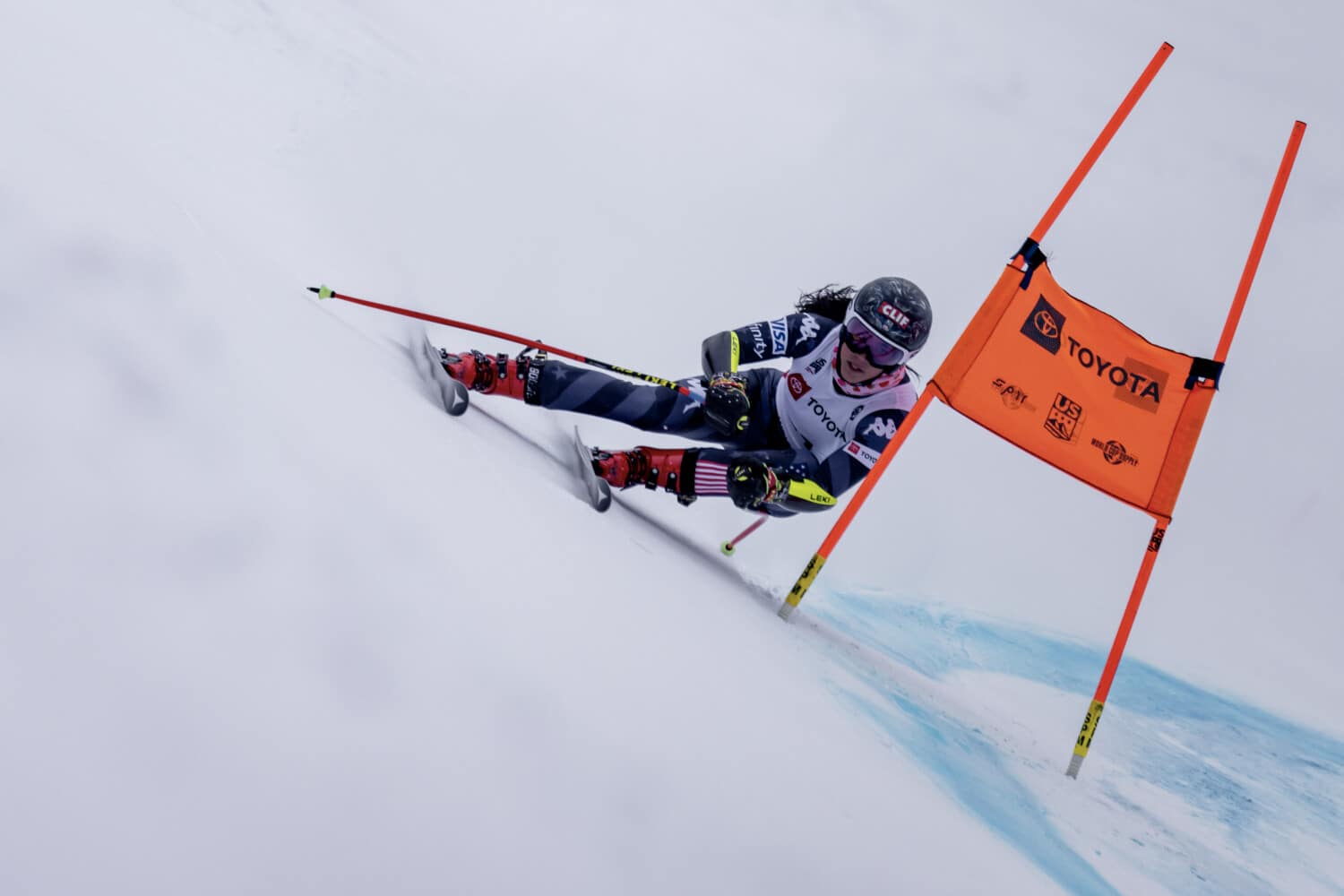
For years, Birds of Prey was considered too challenging for women's racing. That changed in 2024, when women descended upon Beaver Creek for the first-ever downhill on the famed Birds of Prey course in a two-week extravaganza featuring back-to-back men's and women's World Cup ski racing.
The historic weekend proved doubters wrong. Austria's Cornelia Huetter, who secured the first-ever women's Birds of Prey downhill victory, said "Yes, it's steep! It was the same steepness as on the men's side. But we all skied really solid…so it was one step forward and we showed the whole world that (women) can race the Birds of Prey."
Adding to the weekend's significance, American ski racing legend Lindsey Vonn was a forerunner for both the downhill and super-G as she prepared for her return to World Cup racing after a six-year retirement. More than 5,000 fans witnessed this groundbreaking moment in ski racing history.
The VVF is currently working with the International Ski and Snowboard Federation (FIS) to hopefully bring women back to Beaver Creek again in 2026, building on the incredible success and groundbreaking significance of 2024's historic races. After proving that the Birds of Prey course is indeed suitable for women's racing, and witnessing the enthusiasm from both athletes and fans, there is momentum to make women's racing a regular feature of Beaver Creek's World Cup calendar.
A Legacy Beyond Racing
What began as an ambitious bid to host a single World Championships has evolved into something far greater. The VVF's commitment to ski racing has:
- Established Vail and Beaver Creek as permanent fixtures on the international stage
- Created an economic and cultural impact that extends far beyond race weekends
- Inspired countless young athletes and brought the world's best racing to American audiences
- Proved that with vision, dedication, and community support, anything is possible
The story of the VVF and ski racing isn't just about times and medals. It's about a community that dared to dream big and never stopped pushing boundaries. From that first bid in the 1980s to the four-race weekend coming this December and beyond, the VVF has consistently proven that the best is yet to come.
As we prepare for the 2025 Stifel Birds of Prey World Cup ski races, we're not just anticipating a great competition: we are celebrating nearly six decades of world-class ski racing in the Vail Valley. The Birds of Prey course awaits, and the next chapter of this incredible story is about to unfold.
The 2025 Stifel Birds of Prey takes place December 4-7 at Beaver Creek. Visit bcworldcup.com for VIP tickets and more information.